Te Wao Nui o Tapuika says "Haere rā" to rats in their 708 hectare project area behind Te Puke.
To support a successful kōkako breeding season, rats must be below 5%. In November 2025, Tapuika achieved 0% - meaning no rat prints were identified in any of their tracking tunnels after the two-month bait laying operation.
Te Taiao Kaimahi, Richie Emery, says "We're grateful we were able to make a big impact this year, and knowing we've given the manu and the ngahere a chance to thrive".
Te Wao Nui o Tapuika aspire to restore the relict population of kōkako within Te Takapū o Tapuika, the belly of Tapuika. Their goal is intergenerational, to ensure Tapuika uri (descendants) are continuously practicing, protecting and enhancing all land, water, air, sea and natural taonga within their sacred whenua.
The field team of two are effectively managing 708-hectares of best-practice predator control infrastructure (a mixture of bait stations and traps) in whenua that connects vital kōkako ecological habitats between Ōtanewainuku and Kaharoa.
Te Wao Nui o Tapuika are part of the “Kaimai Mamaku Restoration Project” that is led by Manaaki Kaimai Mamaku Trust. CEO Louise Saunders says the result is a testament to the team’s commitment to the long-term vision of ‘restoring the mauri of the Kaimai Mamaku’.
“We’re in a challenging funding environment where this team has had to down-size, but they’ve persevered and continued to work hard toward the collective vision. With the help of volunteers and community support they’ve been able to achieve 0% rats after a toxin operation - that’s something we should all be proud of,” she says.
Te Taiao Kaimahi, Rawiri Faulkner, says the mahi is hard but it’s rewarding.
“You’re not just working for money, you’re giving back to te taiao and it’s a good feeling. I'm not doing it for me, I'm doing it for a bigger cause, for our future generations. That’s what keeps me going,” he says.
The Kaimai Mamaku Restoration Project started in 2020 with Jobs For Nature funding. The eight iwi and hapū groups, including five based in Bay of Plenty, are now supported by co-funding from BayTrust, TECT and others.
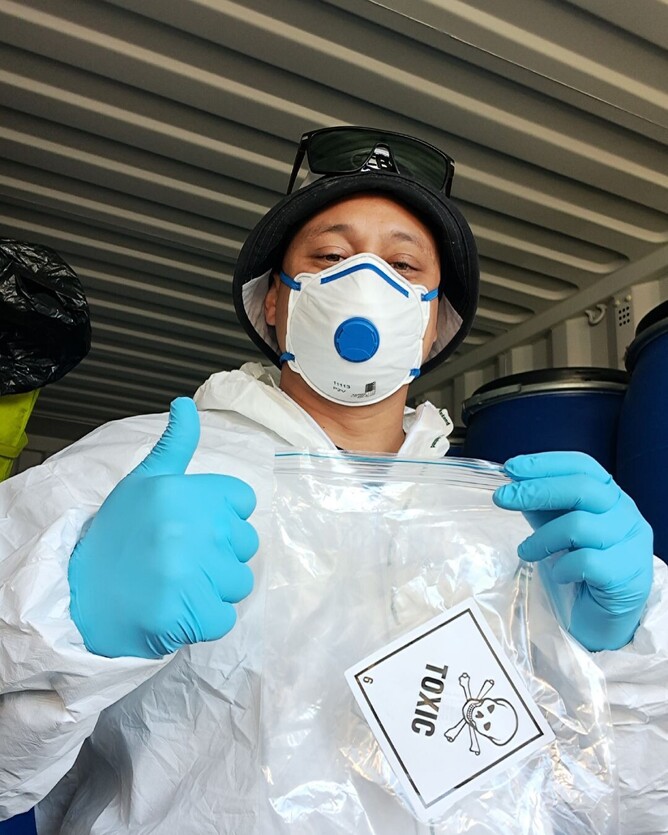
Tapuika Te Taiao Kaimahi, Richie Emery